
Biomass Cookstoves for Rural Households
Traditional cooking methods using open fires and inefficient stoves create serious health, environmental, and economic challenges for rural families. Our biomass cookstove program provides efficient, clean, and affordable cooking solutions that transform daily life while protecting the environment.
Contact Us
The Challenge We Address
Critical Issues in Rural Cooking
Health Impact
- Indoor Air Pollution: Traditional stoves release harmful smoke and particulates
- Respiratory Diseases: High rates of asthma, pneumonia, and chronic lung conditions
- Eye Problems: Constant smoke exposure causing irritation and vision issues
- Women & Children Most Affected: Primary cooks and young children bear highest health burden
- Healthcare Costs: Significant medical expenses due to smoke-related illnesses
Environmental Burden
- Excessive Fuel Consumption: Traditional stoves are highly inefficient
- Deforestation Pressure: Unsustainable biomass collection from forests
- Carbon Emissions: High greenhouse gas emissions from incomplete combustion
- Air Quality: Outdoor pollution from widespread inefficient cooking
Economic & Social Impact
- High Fuel Costs: Significant household spending on cooking fuel
- Time Burden: Hours spent collecting fuel, especially by women and children
- Opportunity Cost: Time that could be spent on education or income generation
- Physical Strain: Drudgery from fuel collection and inefficient cooking
Our Solution: Advanced Biomass Cookstoves
Efficient, Clean, and Affordable Technology
Technical Features
- 50% Fuel Efficiency Improvement: Significantly reduced biomass consumption
- 90% Emission Reduction: Dramatic decrease in harmful pollutants
- Complete Combustion: Advanced design ensures efficient burning
- Durable Construction: Built to withstand daily use in rural conditions
- User-Friendly Operation: Simple to use and maintain for all family members
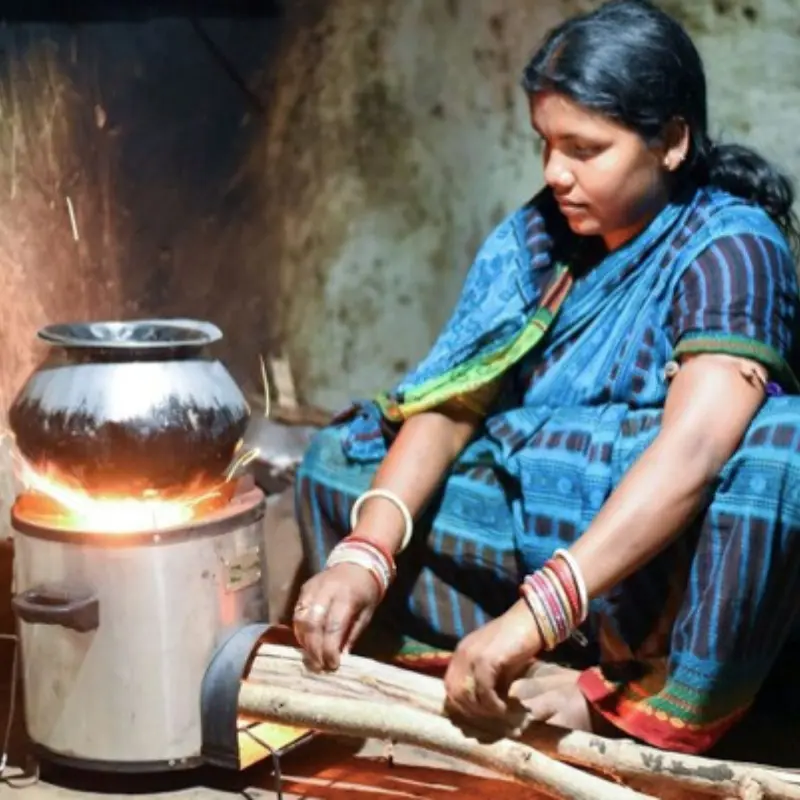
Types of Cookstoves
- Permanent installation for regular household cooking
- Higher efficiency and longer lifespan
- Suitable for larger families with consistent cooking needs
- Better heat retention and cooking performance
- Ideal for small families and flexible cooking needs
- Easy to move and store when not in use
- Perfect for seasonal agricultural workers
- Affordable entry-point for cookstove adoption
- Large-capacity stoves for schools, community centers, institutions
- Cost-effective for feeding large groups
- Shared investment and maintenance model
- Demonstration effect for household adoption
Comprehensive Program Approach
Beyond Distribution: Complete Support System
Community-Based Distribution
- Women's Self-Help Groups: Leveraging existing community networks
- Group Purchasing: Collective procurement for better pricing
- Peer Demonstration: Hands-on experience with existing users
- Community Champions: Training local advocates and promoters
Installation & Setup Support
- Professional Installation: Proper setup for optimal performance
- Safety Protocol Training: Safe operation and maintenance practices
- Fuel Preparation: Guidance on selecting and preparing biomass fuel
- Ventilation Setup: Ensuring adequate air flow and smoke extraction
Training & Capacity Building
- Efficient Cooking Techniques: Maximizing fuel efficiency and cooking speed
- Maintenance Workshops: Regular cleaning and upkeep procedures
- Troubleshooting: Problem identification and resolution
- Recipe Adaptation: Modifying traditional cooking methods for new stoves
Health & Environmental Benefits
Transforming Lives and Protecting Nature
Immediate Health Improvements
Respiratory Health
- 75% reduction in respiratory infections, especially in children
- Decreased asthma and chronic cough incidents
- Improved lung function for primary cooks (usually women)
- Reduced risk of pneumonia and other smoke-related diseases
General Health Benefits
- 90% reduction in eye irritation and smoke-related vision problems
- Improved indoor air quality for entire family
- Reduced headaches and fatigue from smoke exposure
- Better sleep quality due to cleaner indoor environment
Women's Health Focus
- Reduced exposure during pregnancy leading to better maternal health
- Lower risk of premature births and low birth weight babies
- Decreased physical strain from fuel collection and cooking
- More time available for healthcare and self-care
Environmental Protection
Forest Conservation
- 40-60% reduction in biomass fuel consumption per household
- Decreased pressure on local forest resources
- Reduced deforestation and habitat destruction
- Contribution to community forest regeneration efforts
Climate Impact
- Significant reduction in carbon dioxide emissions
- Lower methane emissions from incomplete combustion
- Contribution to national carbon reduction commitments
- Reduced black carbon (soot) emissions affecting regional climate
Economic Advantages
Saving Money, Creating Opportunities
Direct Cost Savings

- ₹800+ monthly savings in fuel costs per household
- Reduced healthcare expenses due to improved health
- Lower replacement costs compared to traditional stoves
- Decreased time spent on fuel collection
Time Savings & Productivity

- 2+ hours daily time savings for women and children
- Time redirected to education, income generation, or family care
- Faster cooking times due to improved efficiency
- Reduced frequency of fuel collection trips
Income Generation Opportunities

- Local Manufacturing: Training community members in cookstove production
- Maintenance Services: Local technicians for ongoing support
- Fuel Processing: Business opportunities in processed biomass fuel
- Demonstration Services: Income from training other communities
Local Manufacturing & Employment
Community Production Model
We promote local manufacturing to create employment while reducing costs and improving accessibility.
Training Local Artisans
- Technical skills for cookstove manufacturing
- Quality control and standardization procedures
- Business development and marketing support
- Raw material sourcing and supply chain management
Employment Generation
- Direct Employment: Manufacturing, installation, and maintenance jobs
- Indirect Employment: Raw material supply, transportation, marketing
- Women’s Employment: Priority for women in manufacturing cooperatives
- Youth Engagement: Technical training and entrepreneurship opportunities
Quality Assurance & Standards
Technical Standards
- Thermal efficiency testing and certification
- Emission standards adherence for clean burning
- Durability testing for rural usage conditions
Quality Control Process
- Pre-distribution inspection of all cookstoves
- Installation quality checks by trained technicians
- User feedback systems for continuous improvement
- Regular performance monitoring and maintenance support

Application Process
How to Access Clean Cooking Solutions
For Individual Households
Community Registration
Register through local SHG or village leader
Group Formation
Form purchasing group of 10-15 households
Training Attendance
Participate in cookstove operation training
Installation Scheduling
Arrange professional installation appointment
Follow-up Support
Access ongoing maintenance and troubleshooting
For Communities
Village Assessment
Evaluate community needs and readiness
Leadership Engagement
Involve village leaders and women's groups
Program Customization
Adapt program to local contexts and preferences
Implementation Planning
Develop phased rollout schedule
Impact Monitoring
Establish systems for tracking program effectiveness
Required Documentation
Household identification and address proof
SHG membership or community group participation
Basic demographic information for impact tracking
Commitment to program participation and feedback provision
Partnership Opportunities
Collaborative Approach
Government Partnerships
- State Clean Energy Programs: Leveraging government subsidies and schemes
- Rural Development Departments: Integration with existing development programs
- Health Department: Collaboration on public health impact assessment
- Forest Department: Partnership on sustainable biomass sourcing
Corporate Partnerships
- CSR Implementation: Corporate funding for large-scale distribution
- Technology Partnerships: Collaboration on cookstove design and manufacturing
- Supply Chain Partners: Efficient distribution and logistics support
- Employee Engagement: Corporate volunteer programs for installation support